A police report could limit an entire night to a few pages. The charge could be as simple as a sentence.
The real world isn’t always that neat.
Perhaps dinner started at seven. The argument started at nine. A person went off at ten, but returned later. A neighbor then phoned the police just before midnight. A driver may have spent the evening out with friends, and then returned to his vehicle to be stopped some miles away, tested with a preliminary breathalyzer, and subsequently arrested. The whole thing could have been turned into an arrest in the early morning.
Criminal defense lawyers in Grand Rapids, Michigan, one useful task is putting the entire sequence back into.
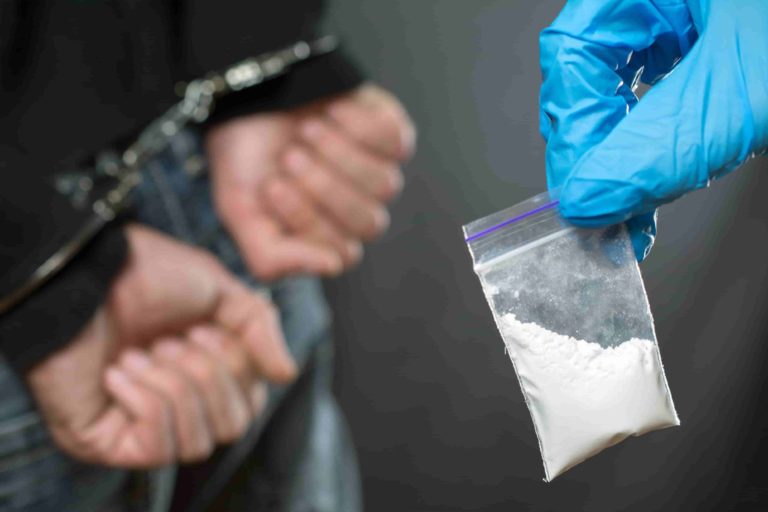
You may begin earlier than the arrest
The people who live in the moment will always remember the dramatic scene flashing lights, policemen waiting at the entrance, handcuffs in hand, or a police call. To fully comprehend the circumstances of the circumstances surrounding an incident, it might be necessary to revisit the event to the moment.
Michigan law considers the connection between two people when deciding whether to prosecute an incident of domestic violence. The information supplied by the firm pinpoints persons such as spouses, former spouses, parents of a shared child, dating partners and people who previously resided together.
Even the incidents that predated the response of police are crucial. Was there a continuing disagreement? Who was the person involved? What time did the interaction start? Who left and returned? Did anyone have a conversation prior to or after the event?
These aren’t just questions to fabricate a story. They help domestic violence defense lawyers in Grand Rapids, Michigan understand the allegation in its actual sequence rather than treating the moment police arrived as the beginning of everything.
In addition, the specific charge is vital. Michigan is a distinct state for types of domestic violence charges The firm’s materials highlight that prior convictions can impact the severity of future charges.
The OWI Stop has its own timeline
The order of events that occur in the course of a drunk driving investigation could be shorter, however it’s still significant. The driving itself as well as the motive of the officer making contact, the observations made after the stop, roadside procedures such as statements, tests and the arrest. The idea of treating all of it as one event can hide the fact that different aspects of the interaction serve distinct objectives.
Michigan defines the crime as Operating while intoxicated, also known as OWI as per MCL 257.625. The firm’s announcement states that a breath test, also known as PBT, commonly referred to as PBT, is a screening tool that is not admissible at trial for evidence of intoxication; it may be used to determine the probable motive.
This distinction is the reason why defense lawyers for drunk driving in Grand Rapids may reconstruct the traffic stop instead of focusing on a single number that the driver can recall from the side of the road.
Sometimes the Timeline appears on a phone
Not every criminal investigation begins with police witnessing anything themselves.
Sexual offenses may be based on events that occurred earlier. It could have occurred within a relationship, family or personal situation, or with colleagues. According to a description from the company the person could discover the existence of an investigation before being taken into custody.
In this instance the chronology could be distributed over a variety of sources. The messages can help determine when people communicated. Digital records can help to identify the order of events. Individuals may have multiple accounts of the same incident.
However, that doesn’t mean a single text message is a guarantee that is a proof or a disproof of an assertion. This means that criminal sexual misconduct defense lawyers in Grand Rapids, Michigan may need to be aware of how messages statements, statements, credibility issues as well as other relevant information fit together.
Memory and Documentation are Not the Same
After a stressful interaction people tend to remember instances, not time stamps. “It happened later that night” could be a perfectly normal response in conversation, but it’s too vague to provide a precise legal question.
Documents can help you organize your personal memories. Existing records, such as messages, logs of calls, photos, receipts, court papers and court papers, could help establish the chronological sequence. What’s relevant is determined by the specific situation.
Additionally, records must be kept instead of altered in an attempt to make the situation appear better. A defense lawyer can identify what details could be crucial and then decide on the best way to handle the situation.
A Case Number Can’t Capture the whole evening
Shawn Haff has been practicing criminal law in Grand Rapids for more than 16 year, while the Criminal Defense Law Center of West Michigan has handled more than 1,500 criminal cases over more than 25 years of practicing. The firm’s experience includes OWI Domestic abuse, assault, drug-related charges and sexual assaults, weapons retail fraud, driver’s licence renewal, and expungements.
Past outcomes, such as dismissals reductions, acquittals or favorable pleas–cannot promise the result of a different case.
Each case has distinct people and a particular sequence, along with allegations and evidence. This is what matters.
An arrest can happen in minutes. In just a few words, you can write an arrest label. Understanding the circumstances that led to it is often a matter of slowing the speed of the night down and examining what happened in the order in which it occurred.